

The team has just returned from a 22-day expedition into the high seas! The Into the Deep: Monsoon Rise Expedition (7- 28 October 2025) was jointly led by the National University of Singapore (NUS) and OceanX to explore deep-sea biodiversity and ecosystems in the previously uncharted waters of Monsoon Rise, a seamount complex in the eastern Indian Ocean.
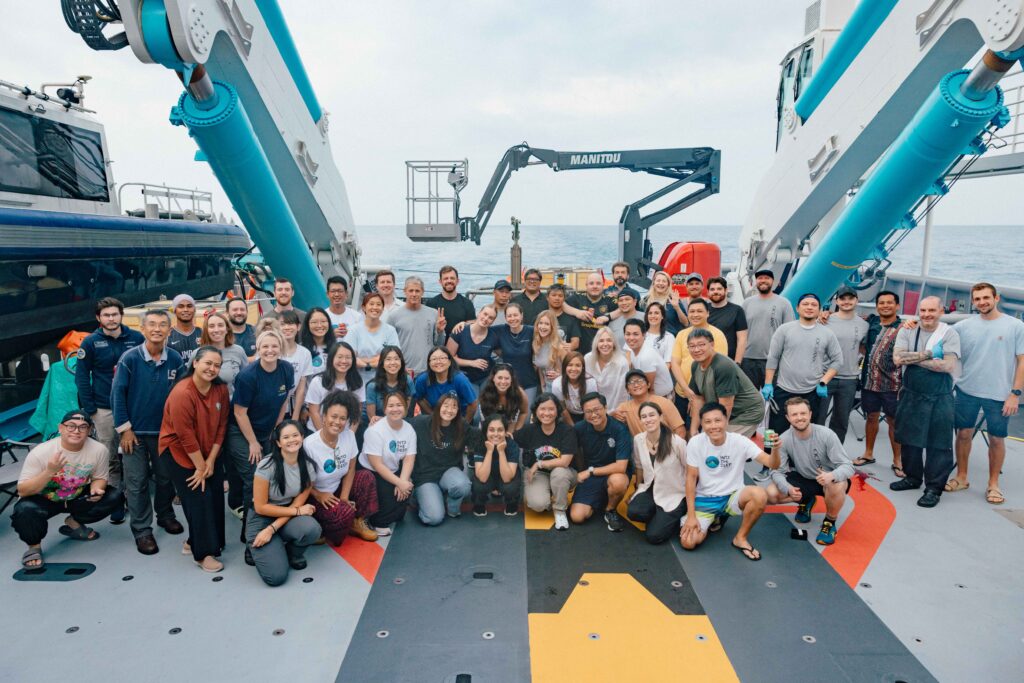
This was Singapore’s first major deep-sea research expedition since the adoption of the Biological Diversity of Areas Beyond National Jurisdiction (BBNJ) Agreement, reinforcing the country’s leadership in advancing responsible, transparent, and collaborative ocean science. This mission united scientists from across ASEAN and the South Pacific, including Singapore, Indonesia, Thailand, Vietnam, and Fiji.
“We strongly believe that this collaboration with OceanX, together with our friends from neighbouring countries and island states, will strengthen the global marine science research framework and support this landmark agreement which will come into force next year.”
– Professor Peter Ng, Mission Lead from the National University of Singapore
What did we find?
Prior to this expedition, virtually nothing was known about Monsoon Rise—not the depths, not the terrain, and certainly not the animals that lived there. To get a glimpse into the remote and inaccessible underwater world, the team deployed state-of-the-art equipment including multi-beam sonars, remotely operated vehicles (ROVs), deep-sea landers, plankton nets, and box corers.
The acoustic team used their high-tech multi-beam sonar to successfully map over 8,300 square kilometers of seafloor, producing a high-definition map of the two seamounts and the intervening abyssal plain between them. Approximately 70 percent is new to science, with data to be shared through public repositories.
Over 12 days of sampling, they collected specimens, water and sediment samples, and footage from depths of 1000 to 5000 m.
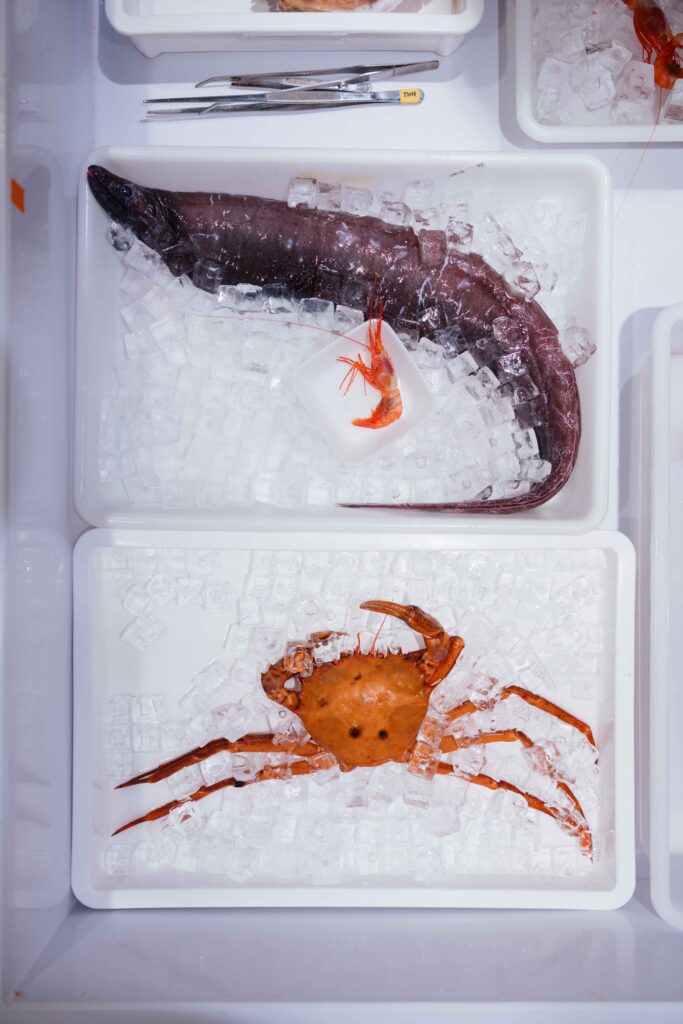
High-resolution camera equipment on the ROV and lander allowed them to study the behaviours of deep-sea organisms living in their natural habitat. Highlights included deep-sea sharks, crabs, and an unexpected mob of sea cucumbers.
“[Past] expeditions have mostly focused on trawling and dredging, which was like scraping the bottom of the sea blindly. But with the ROV, you have a window into their world to see the animals there in their natural state. There were groups of scientists taking shifts, making sure that we pay attention to what’s being fed to us on the different cameras that are on the ROV, which took a lot of focus and attention.”
– Dr Jose Christopher Mendoza, Deputy Chief Scientist from the National University of Singapore
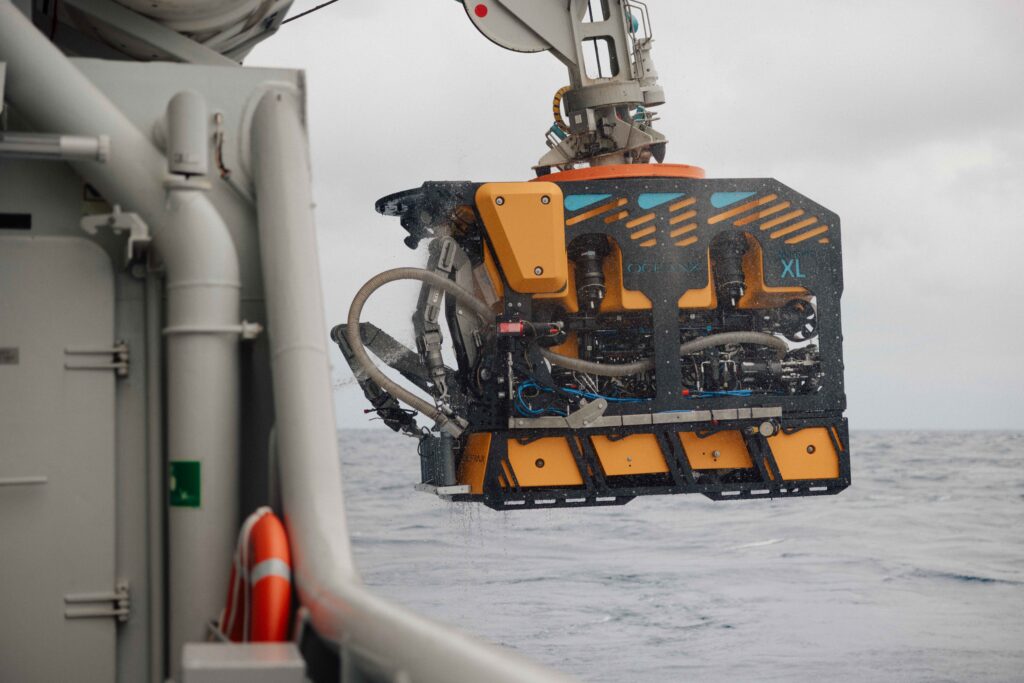
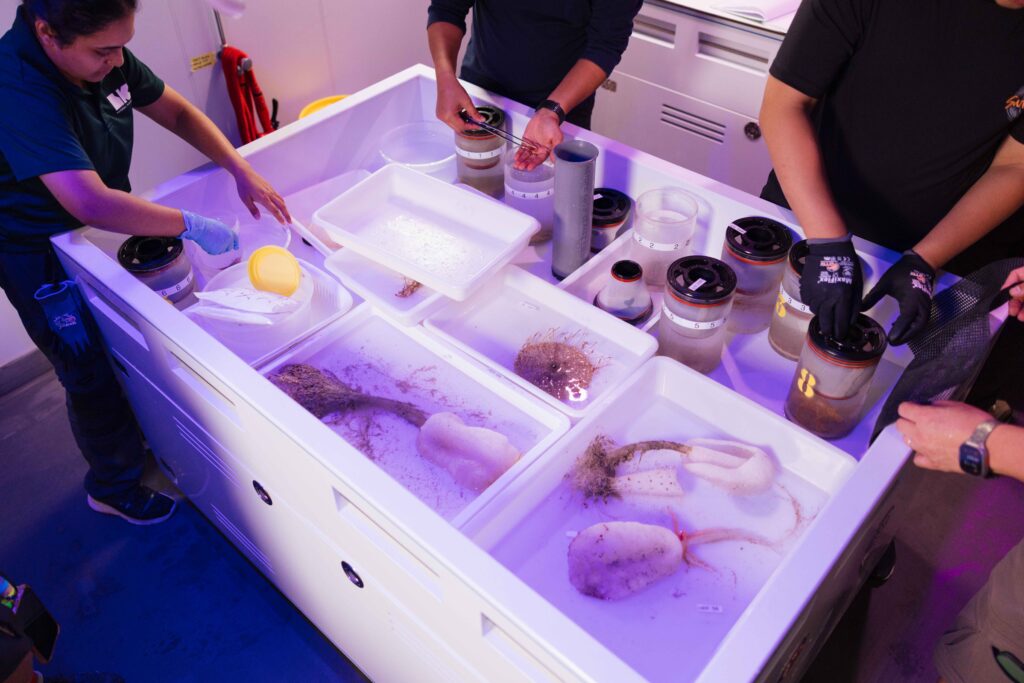
The ROV allowed them to retrieve fragile organisms such as sea cucumbers and jellies, while the lander allowed them to capture fast and agile organisms such as fish. The retrieved specimens were carefully sorted, photographed, and preserved. They will be kept in the Museum collections for future studies.
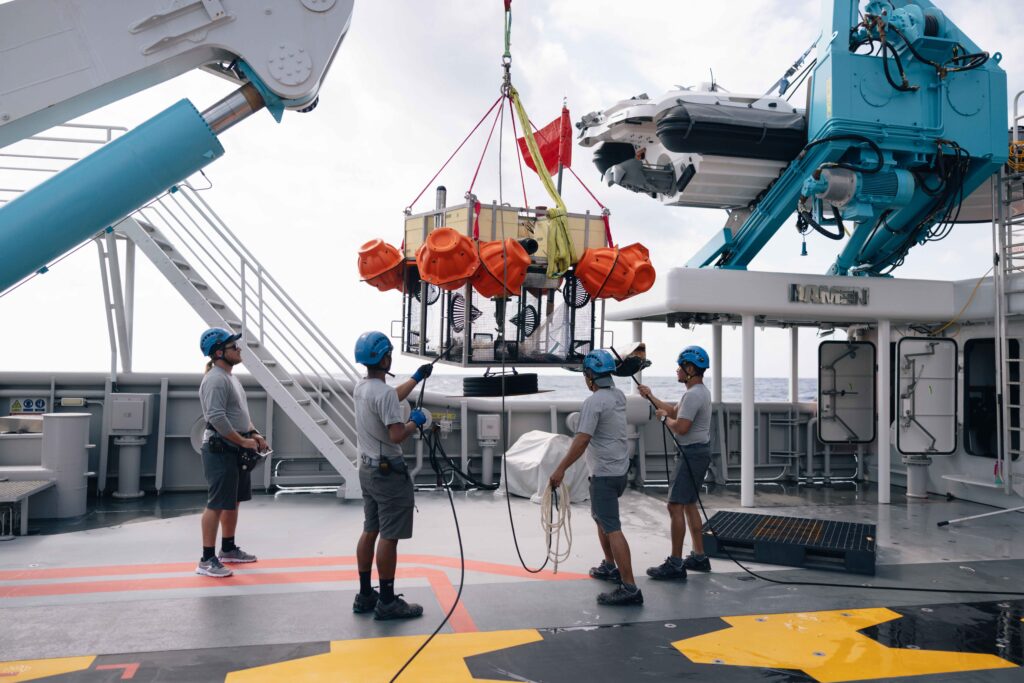
Day-to-day operations
The team was able to rapidly settle into a streamlined workflow within the first couple of days, combining the research expertise of the science team with the technical expertise of the OceanX crew.
The night before, the acoustic mapping team would put together detailed maps of the seamount while the rest of the team was asleep. The science leads would then use those maps to decide where to deploy the equipment, as the ideal sampling site needed to have the right conditions for optimal equipment performance. Each day, the objectives would need to be adjusted according to the previous day’s results.
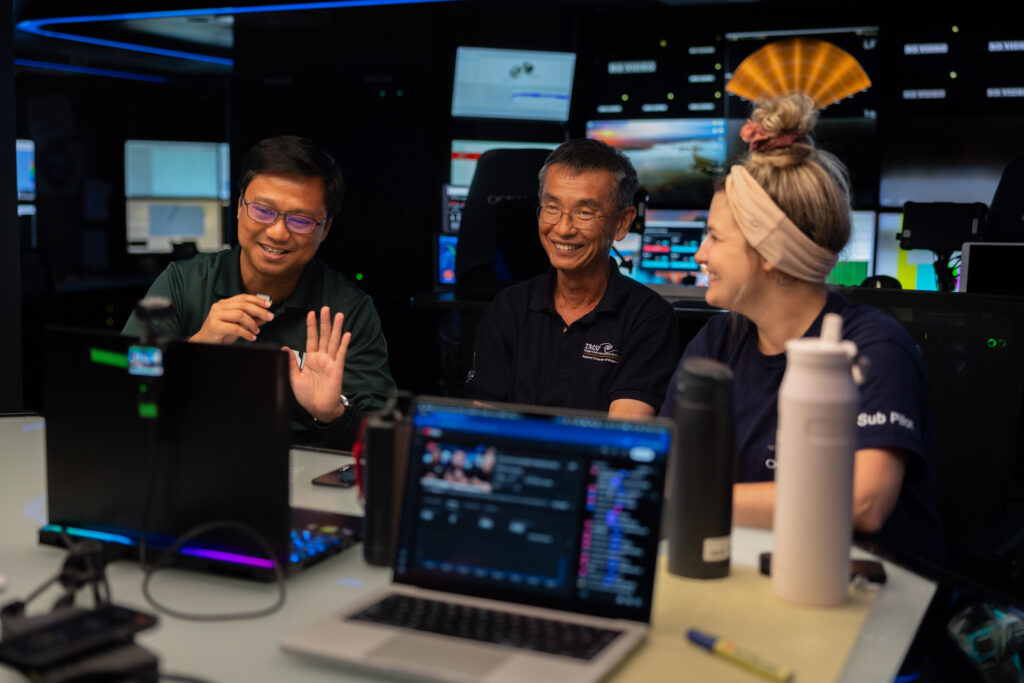
Members of the team worked in shifts, often spending long hours in the mission control room observing an ROV dive, or processing specimens in the wet lab.
Ms Mattie Rodrigue, science program director for OceanX, commented on the exceptional teamwork and open-minded collaboration throughout the mission, demonstrating how “multiple countries can apply their own experts in these seas that need to be understood.”
For the next step, the researchers will analyse the data and report the findings within the next two years. In line with the terms of the BBNJ treaty, the results will be an open access public document.
Written by: Mavis Goh