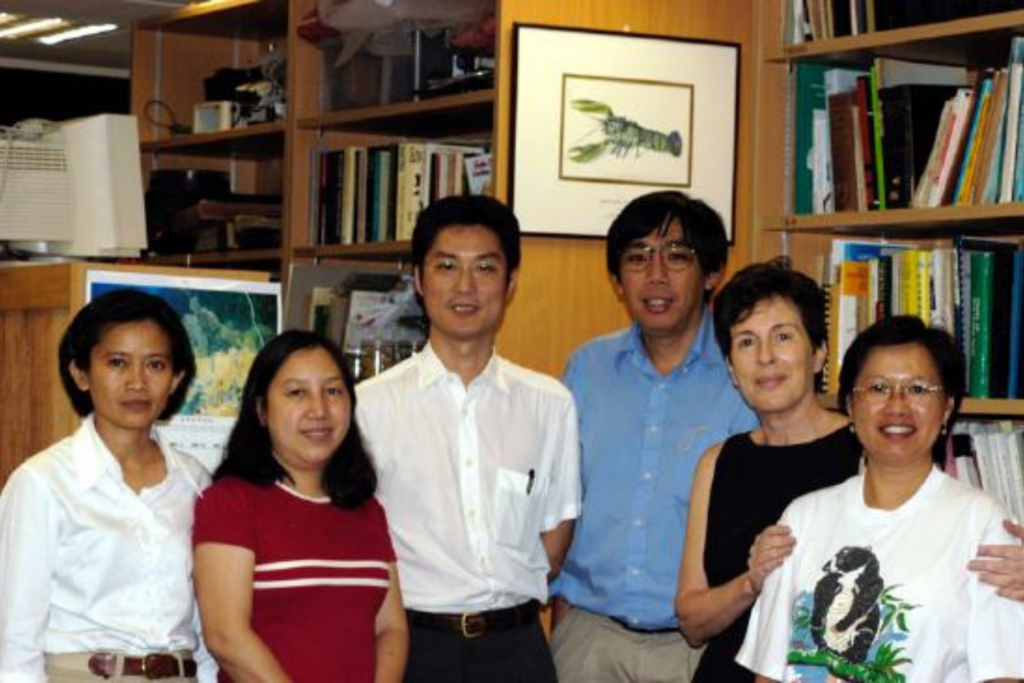
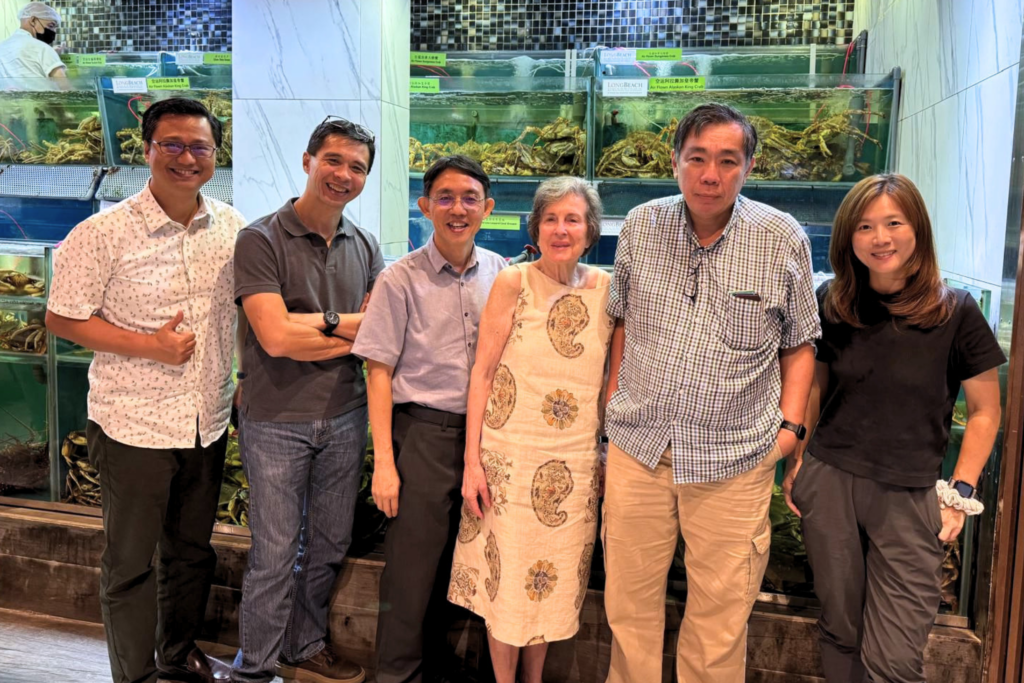
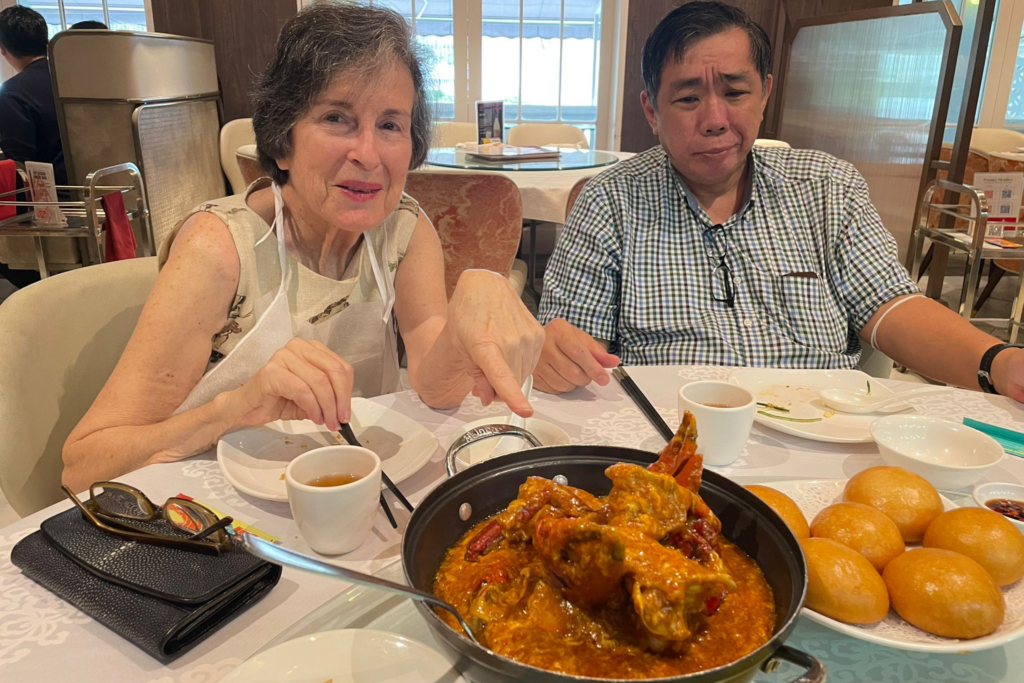
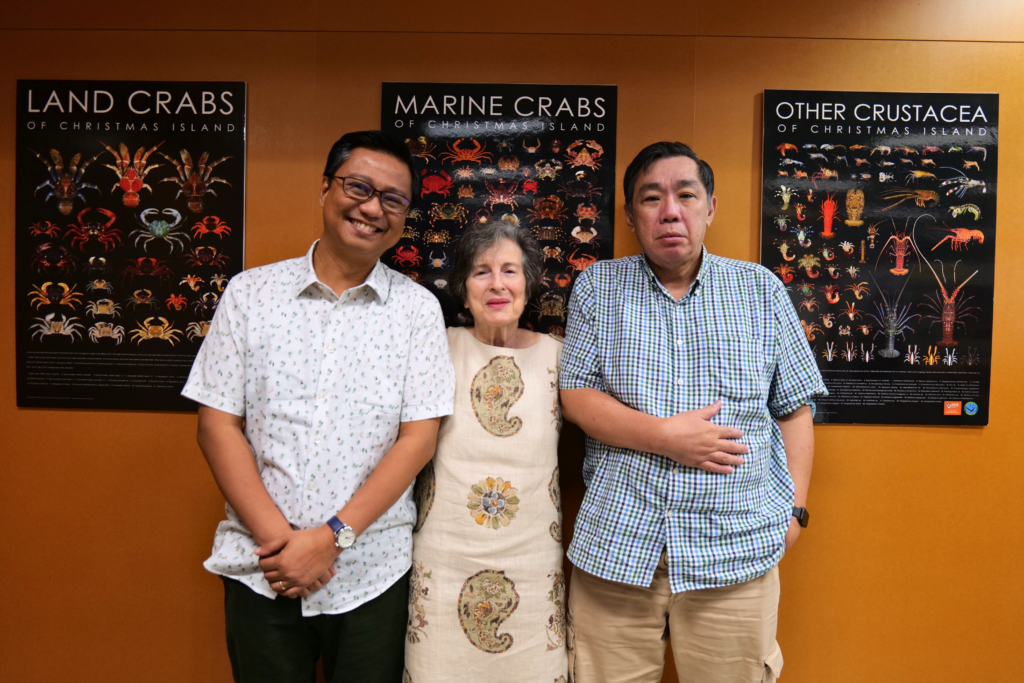
At the Lee Kong Chian Natural History Museum, the corridors often buzz with the energy of visiting researchers from around the world. In April 2026, we had the pleasure of hosting Prof Bella Galil, Curator Emerita of Crustaceans at the Steinhardt Museum of Natural History in Israel. What brought her back to Singapore was not tourism—though she thoroughly enjoyed our duck noodles, longans, and batik clothing—but the joy of scientific collaboration.
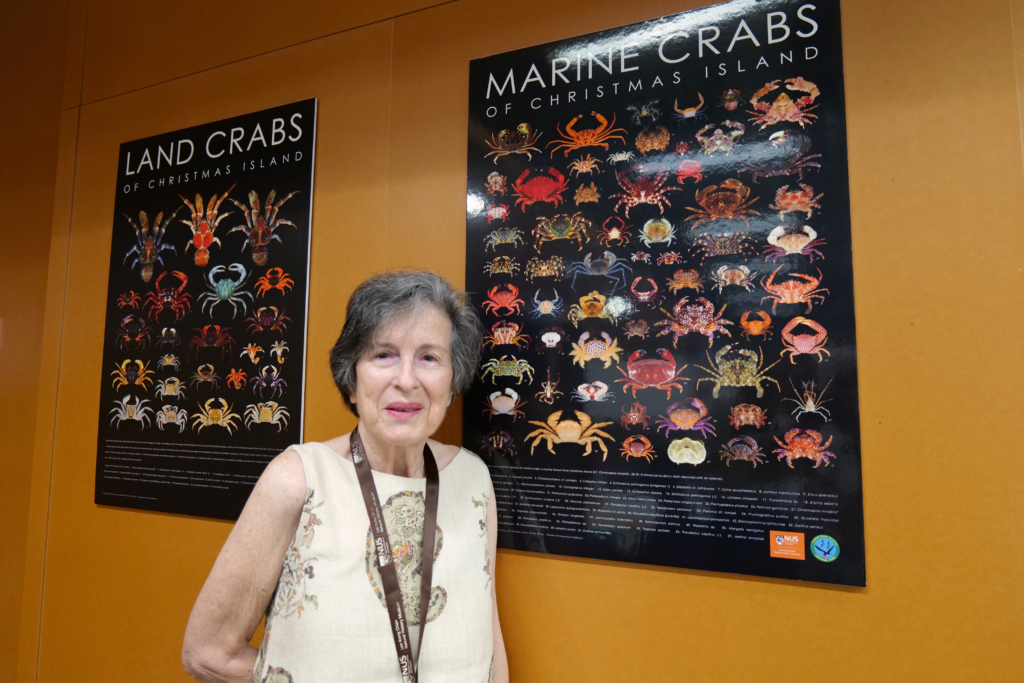
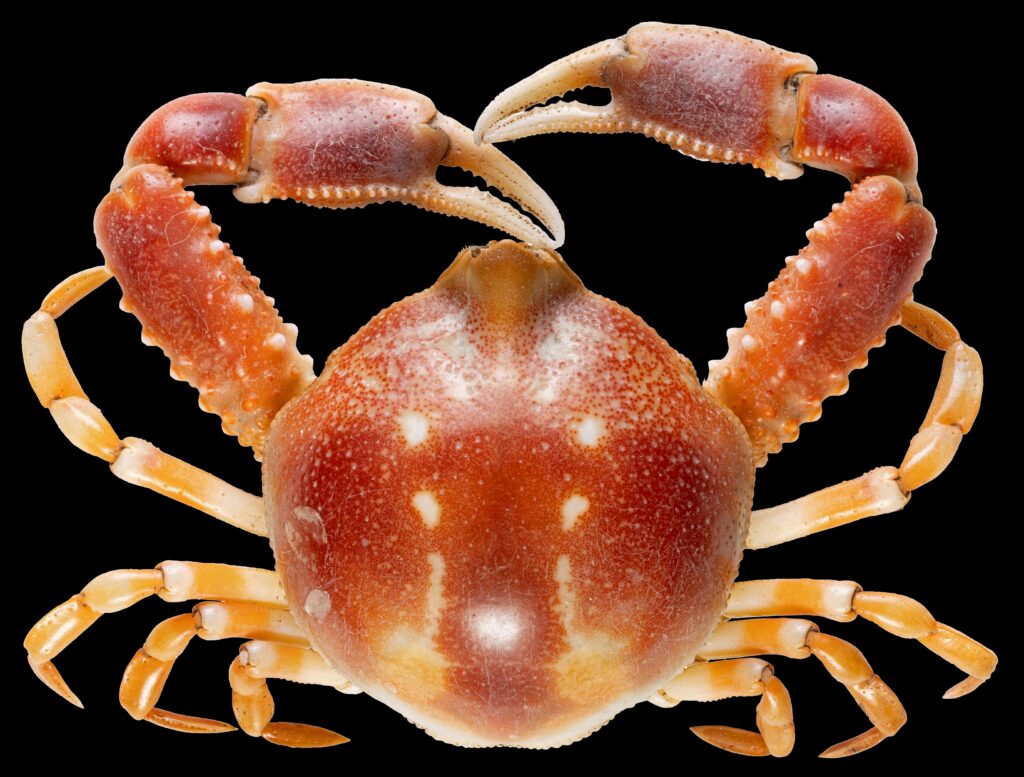
Prof Galil visited from 5 to 19 April to work on her tenth joint paper with Prof Peter Ng, LKCNHM’s Advisor and internationally renowned carcinologist. Together, they are studying leucosiid crabs from New Caledonia, examining specimens from the Zoological Reference Collection (ZRC) and the Muséum national d’Histoire naturelle in Paris that, in many cases, have never been studied in detail. For both scientists, the work feels like stepping into an unseen world.
“This material has never been worked on before,” Prof Galil shared with enthusiasm. “We are the first to recognise some of these species and genera… It’s like going into another world completely.”
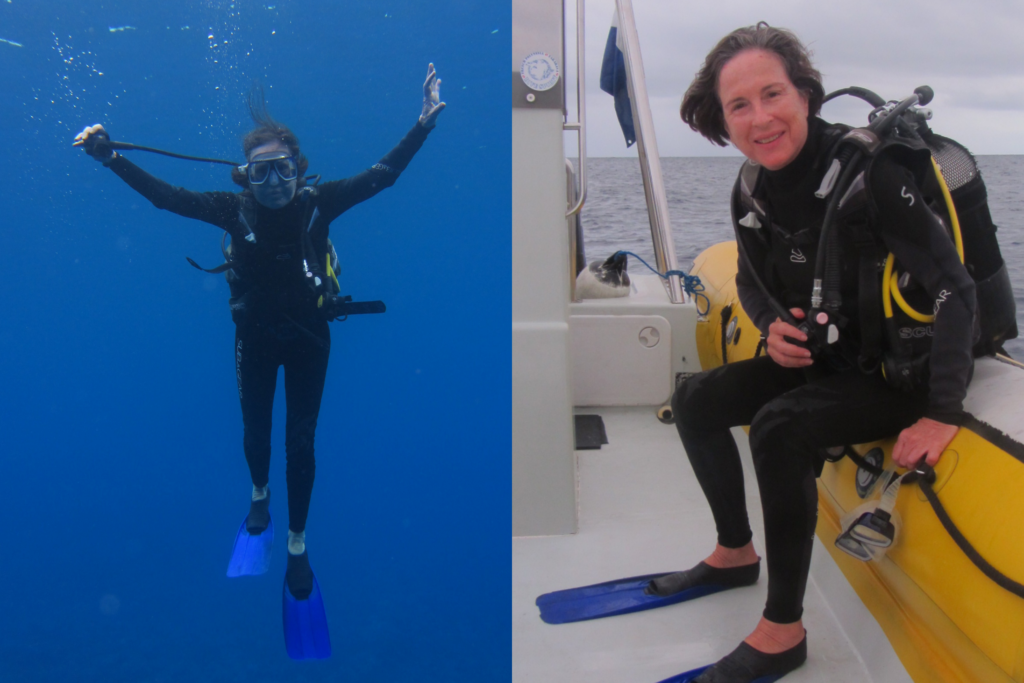
For Prof Galil, taxonomy is far more than the classification of organisms. It reflects a deeply human desire to understand and name the world around us. She often references Genesis 2:19, in which God brings the animals to man “to see what he would call them.” To her, naming a species is a way of bringing it into human consciousness and honouring the vast biodiversity that exists beyond our everyday view.
Her love for culture and storytelling is reflected in her work of taxonomy and scientific naming. In describing new genera, she has drawn inspiration from mythologies across different cultures including Ashtoreth, the Phoenician deity of fertility, and Izanami, the Japanese goddess of creation and death, just to name a few. In doing so, she moves beyond the reliance on traditional Greco-Roman canon and celebrates a wider spectrum of cultural heritage.
From jellyfish invasions to deep-sea wonders
Prof Galil’s journey into marine biology and invasion science took a defining turn in 1999. Massive swarms of jellyfish appeared on Israel’s Mediterranean beaches. No one knew what they were. After searching museum collections and comparing specimens at the Smithsonian National Museum of Natural History, she identified the culprit: Rhopilema nomadica, an invasive jellyfish that had entered the Mediterranean Sea through the Suez Canal. Freed from their natural predators and parasites, these invaders rapidly grew in abundance.
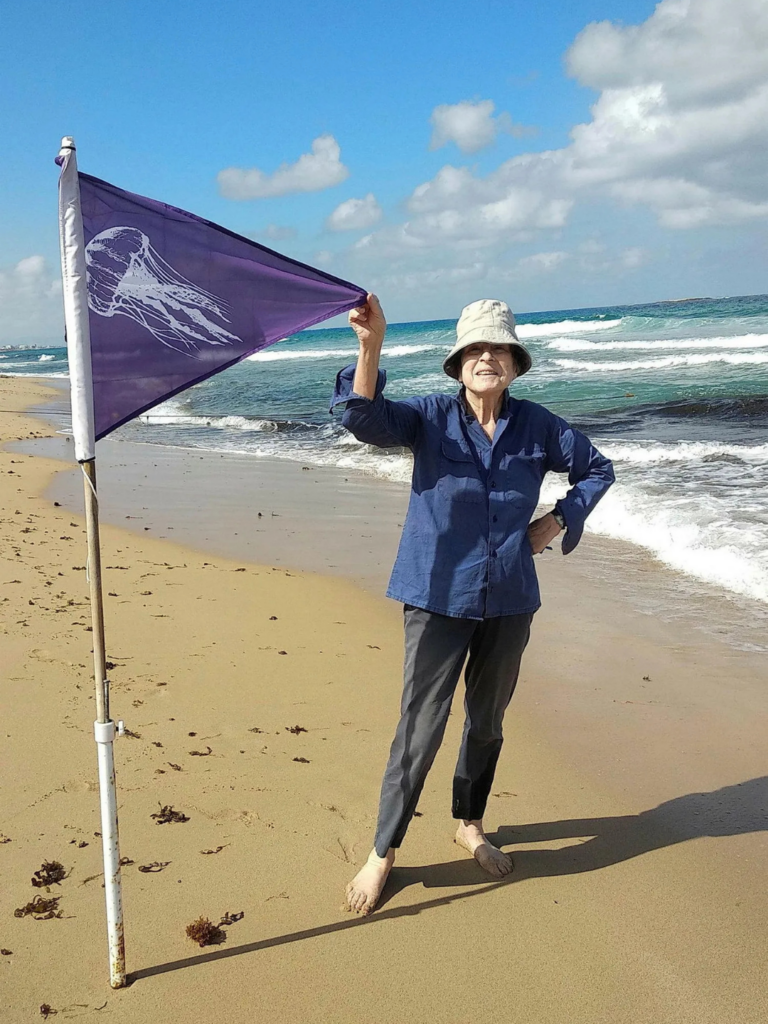
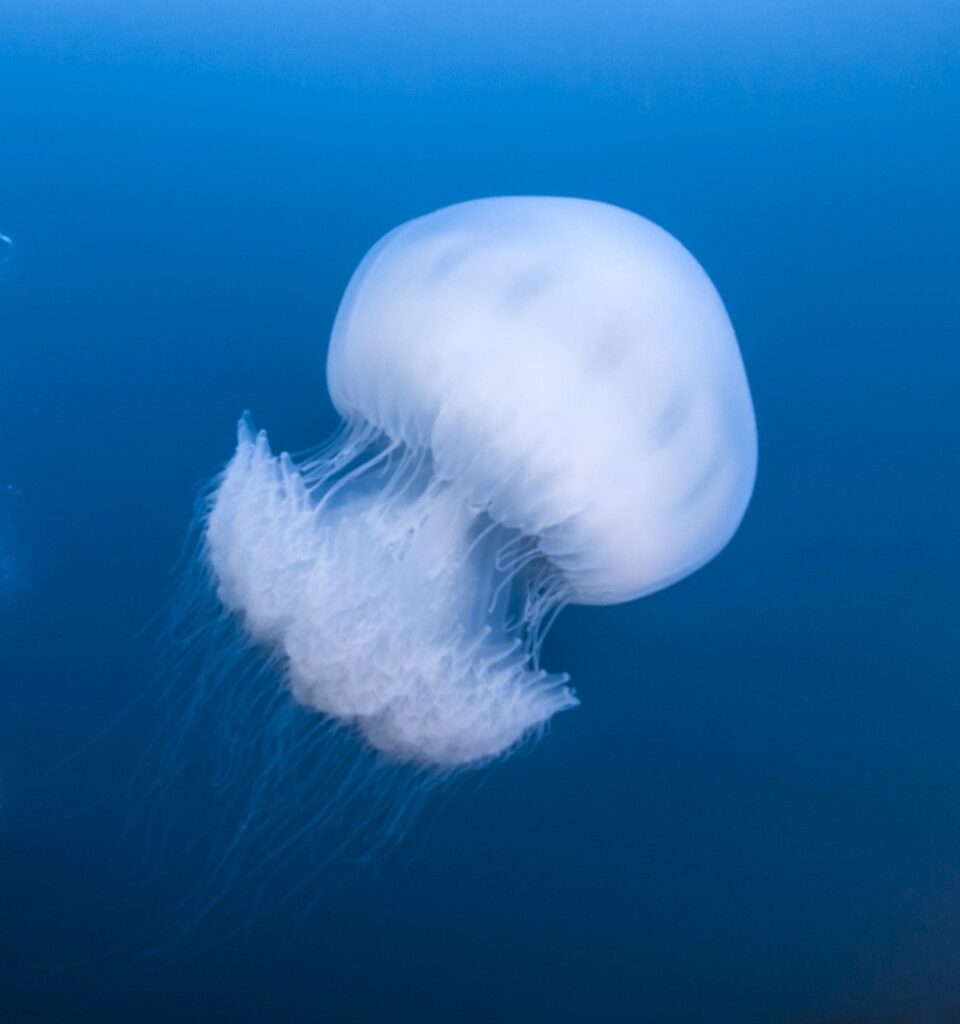
This experience deepened her focus on marine invasions and biosecurity. While Prof Galil jokingly describes the Mediterranean as a mere “bathtub” compared to the vast and ancient Indo-Pacific, both regions are experiencing rapid environmental change. During her visit, she and Prof Ng also discussed the potential impacts of deep-sea mining around New Caledonia’s seamounts, where sediment plumes could disrupt delicate, sedentary ecosystems that have remained relatively stable for millions of years.
A career-long collaboration with LKCNHM
Prof Galil speaks of her partnership with Prof Ng with genuine affection. The two first met at an international conference in Europe in 1992 and their collaboration has since produced nine scientific papers, with a tenth now underway.
“Working with Peter is fantastic,” she said. “He is of international stature… a very good organiser.”
Their process is built on what she describes as a “Socratic exchange” of ideas before any writing begins. He prepares material, they examine specimens together, discuss clues hidden in morphology, debate relationships between species, and gradually piece together the puzzle of crustacean evolution. It is a process driven as much by curiosity as by expertise.
This spirit of generosity and collaboration extends beyond their joint papers. Dr Jose Christopher Escano Mendoza, LKCNHM’s Senior Curator of Crustacea & Other Marine Arthropoda, shared: “Bella did me a great favour last time she was here. She hand-carried an important tissue sample of a crab specimen (a holotype—which is the single, original specimen designated by the scientist upon which the scientific name of a new species is based) deposited in her museum in Tel Aviv, which she obtained when things were in lockdown due to the present security situation there.”
Words of wisdom for the next generation of scientists
When asked what advice she would offer young scientists, particularly those interested in marine invasions, Prof Galil’s response was immediate and passionate:
“Work hard. Document, document, document.”
She emphasised that environments can change far more quickly than we realise. Common species today may decline tomorrow, and rare ecological events can arise from complex, cascading causes. Native biota, fishermen’s observations, and seemingly minor details all matter. She drew parallels to Aristotle, who gathered knowledge from fishermen on a remote island, laying the foundations for some of the earliest studies on natural history. Such lessons, she suggests, remain relevant today: careful observation and thorough documentation are indispensable to good science.
A celebration of science and friendship
Prof Galil’s visit reminds us why museums like LKCNHM remain vital—not just as specimen repositories, but as vibrant centres of research and discovery that connect researchers across continents. Her time here produced new insights, strengthened a long-standing friendship, and reinforced the importance of collections that preserve material for future generations.
As she returns to Israel, we are left inspired by her curiosity, her appreciation of cultures reflected in scientific naming, and her deep respect for the living world—whether in the deep trenches off New Caledonia or the bustling shores of Singapore.
Science, as Prof Galil demonstrates, is never a solo endeavour. It is a “chain (stretching) across time and cultures”, built by people who find joy in naming the unnamed and illuminating the unseen.